
Price from: 779 520UZS (including VAT).
Name of the medical device:
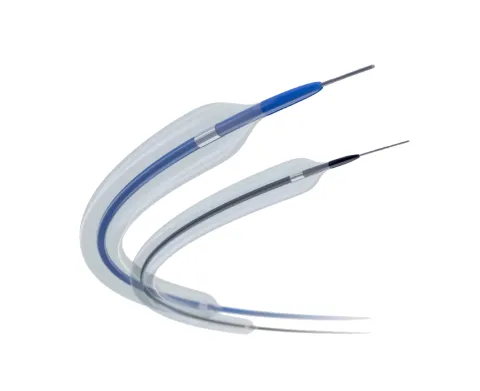
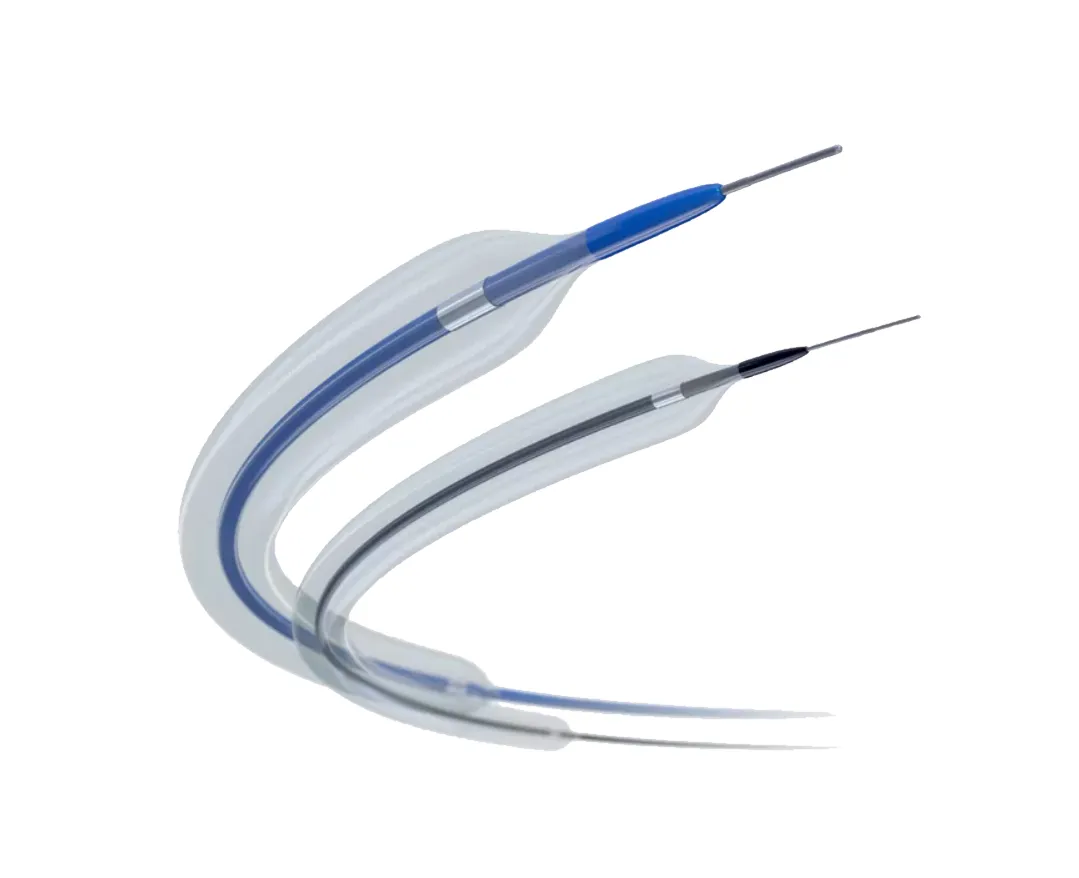
SB+ PTCA balloon catheter with diameters: 1.25; 1.50; 1.75; 2.00; 2.25; 2.50; 2.75; 3.00; 3.25; 3.50; 3.75; 4.00; 4.50; 5.00; 6.00 mm and lengths: 10, 12, 15, 18, 20, 22, 24, 25, 27, 30, 32, 35, and 40 mm.
Scope and purpose of the medical device indicating the user:
This device is registered under the trade name SB+ PTCA Dilatation Catheter (dilatation catheter for Percutaneous Transluminal Coronary Angioplasty – PTCA). The generic name of the device is a PTCA balloon dilatation catheter with a rapid-exchange design.
SB+ PTCA dilatation catheters are indicated for balloon dilation of the stenotic portion of a coronary artery or bypass graft stenosis in order to improve myocardial perfusion. The SB+ PTCA dilatation catheter is also indicated for the expansion of balloon-expandable stents after their introduction and placement.
The device should only be used by physicians who have significant experience and, in particular, experience performing percutaneous transluminal coronary angioplasty (PTCA) procedures and stent implantation.
What are coronary balloons used for?
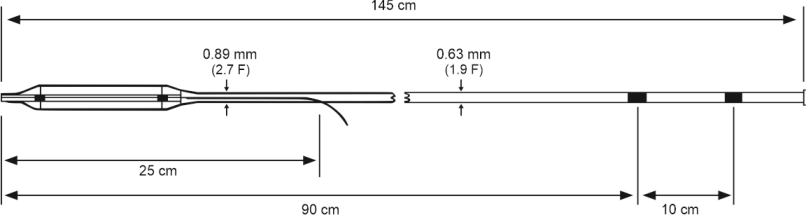
The SB+ PTCA dilatation catheter is designed for dilation of stenotic atherosclerotic lesions in coronary arteries or bypass graft vessels, as well as for the expansion of balloon-expandable stents after their delivery and placement. SB+ PTCA dilatation catheters feature a balloon (expansion element) located near the distal end, with two (2) radiopaque markers indicating the working length of the balloon at nominal pressure.
The proximal adapter includes a port for balloon inflation and a label indicating the nominal balloon diameter and its working length in millimeters (mm). In addition, the catheter has two markers on the proximal shaft that indicate the approximate exit position of the balloon catheter tip from the guiding catheter (brachial – 90 cm; femoral – 100 cm).
Tibtexnika LLC offers the following types of coronary balloons
Description:
The SB+ PTCA dilatation catheter is intended for dilation of stenotic atherosclerotic lesions in coronary arteries or bypass graft vessels, as well as for expansion of balloon-expandable stents after their introduction and placement
| Balloon expansion pressure | Balloon diameter (mm) | ||||||
| (atm) | (kPa) | 2.25 | 2.50 | 2.75 | 3.00 | 3.50 | 4.00 |
| 6 | 608 | 2.21 | 2.45 | 2.70 | 2.94 | 3.43 | 3.92 |
| 7 | 709 | 2.23 | 2.48 | 2.72 | 2.97 | 3.47 | 3.96 |
| 8 (N)* | 811 (N)* | 2.25 | 2.50 | 2.75 | 3.00 | 3.50 | 4.00 |
| 9 | 912 | 2.27 | 2.53 | 2.78 | 3.03 | 3.54 | 4.04 |
| 10 | 1013 | 2.30 | 2.55 | 2.81 | 3.06 | 3.57 | 4.08 |
| 11 | 1115 | 2.32 | 2.58 | 2.83 | 3.09 | 3.61 | 4.12 |
| 12 | 1216 | 2.34 | 2.60 | 2.86 | 3.12 | 3.64 | 4.16 |
| 13 | 1317 | 2.36 | 2.63 | 2.89 | 3.15 | 3.68 | 4.20 |
| 14 | 1419 | 2.39 | 2.65 | 2.92 | 3.18 | 3.71 | 4.24 |
| 15 | 1520 | 2.41 | 2.68 | 2.94 | 3.21 | 3.75 | 4.28 |
| 16 (RBP)* | 1621 (RBP)* | 2.43 | 2.70 | 2.97 | 3.24 | 3.78 | 4.32 |
| 17 | 1723 | 2.45 | 2.73 | 3.00 | 3.27 | 3.82 | 4.36 |
| 18 | 1824 | 2.48 | 2.75 | 3.03 | 3.30 | 3.85 | 4.40 |
• (N)* – Nominal pressure. The balloon burst pressure is based on laboratory test results where at least 99.9% of balloons do not rupture at or below the rated burst pressure (confidence level – 95%). When inflating the balloon, a pressure monitoring device should be used to avoid excessive pressure;
• (RBP)* – Rated burst pressure. The inflation pressure of the balloon must not exceed the rated burst pressure.